
-2/5
Negative numerator
Exactly one negative sign means the value is negative.
Fraction signs
Learn what a negative denominator means, how to rewrite negative denominator fractions in standard form, and how signs behave in negative fraction equations.
Standard form
Enter a fraction with a negative numerator or denominator. The tool moves the sign into the standard position, simplifies the fraction, and explains why equivalent negative fractions have the same value.
Equivalent value
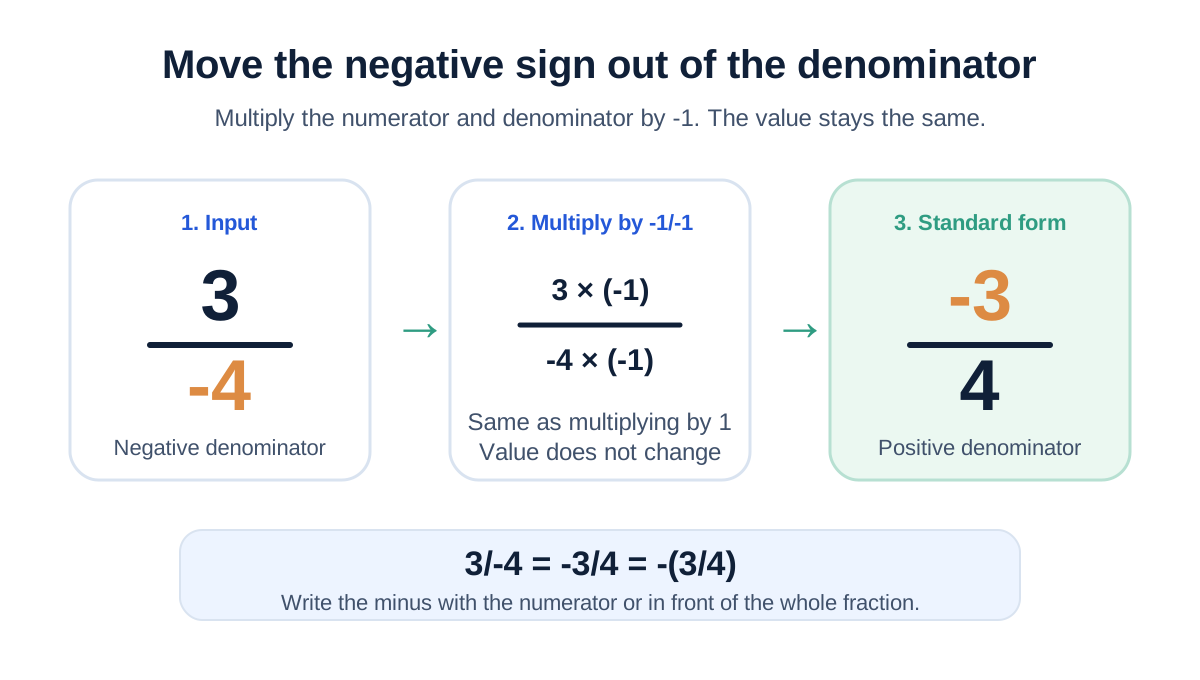
3/-4 = -3/4
Signs in the input
One negative sign
Simplified form
-3/4
Sign rule
A negative sign belongs to the whole fraction. Moving a negative denominator to the numerator does not change the value; it only writes the fraction in its standard form.
Input
Standard form
One negative sign gives a negative result. The standard denominator is positive.
Quick answer
A negative denominator does not make a fraction invalid. For example, 3/-4 has the same value as -3/4. Standard math notation usually keeps the denominator positive, so move the negative sign to the numerator or write it in front of the entire fraction.
The sign rule is simple: one negative sign gives a negative fraction, while two negative signs give a positive fraction. That is why -3/4 and 3/-4 are negative, but -3/-4 equals 3/4.
Core rule
Yes. A denominator can be negative while you are working with a fraction. The denominator cannot be zero, but it may carry a minus sign. The fraction 3/-4 means three divided by negative four, so its value is negative three-fourths.
Teachers and textbooks normally rewrite the answer with a positive denominator because it makes comparison, addition, and later algebra easier to read. Multiply both parts of the fraction by -1: 3/-4 × -1/-1 = -3/4. The value stays the same because multiplying by -1/-1 is multiplying by 1.
Equivalent forms
-2/5
Exactly one negative sign means the value is negative.
2/-5
Move the sign: 2/-5 = -2/5.
-2/-5
The signs cancel: -2/-5 = 2/5.
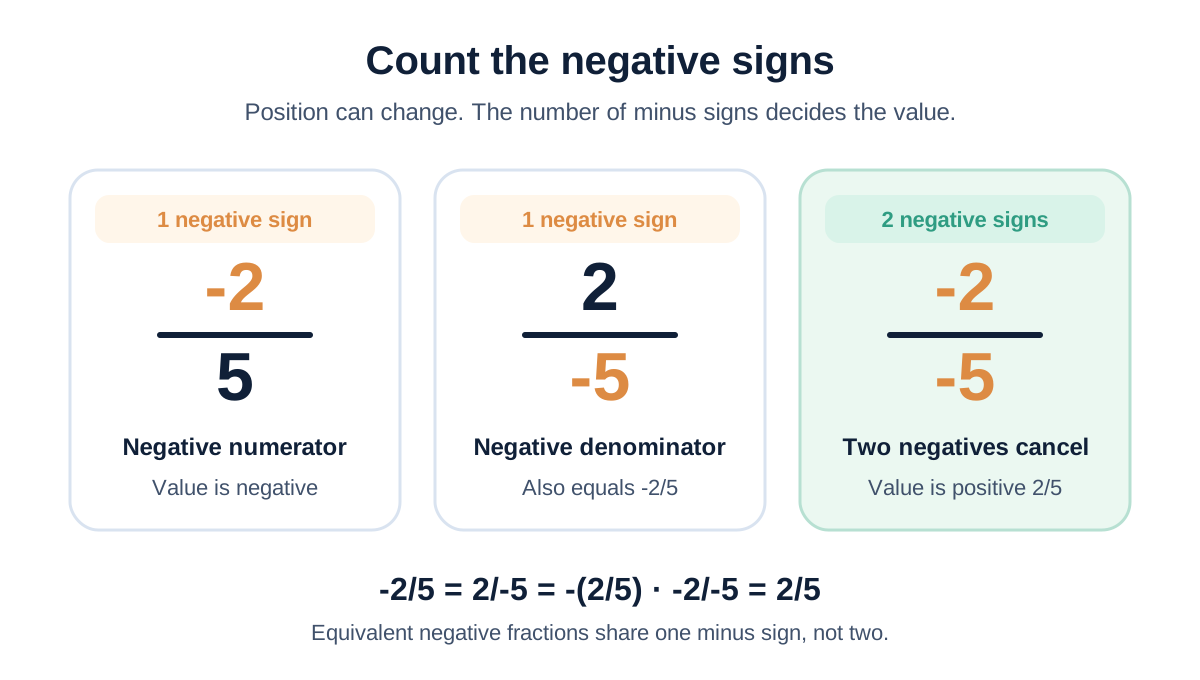
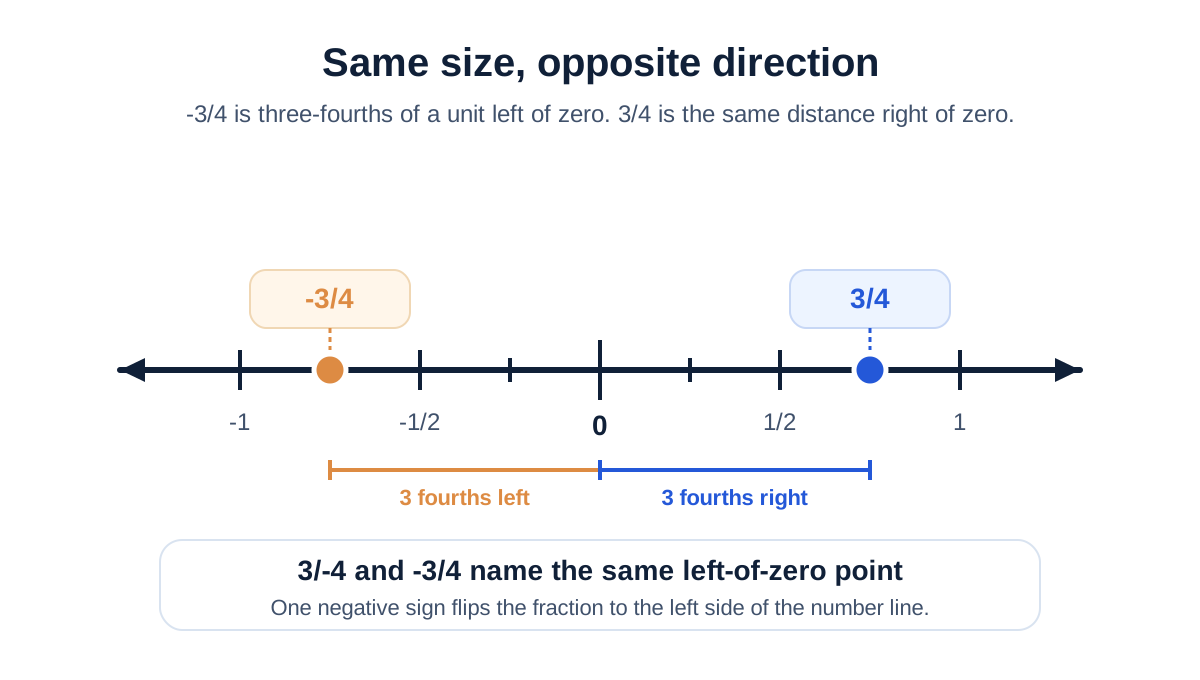
Equivalent negative fractions name the same point on a number line. The negative sign can sit in front of the numerator, in front of the whole fraction, or in the denominator before standardizing. What matters is the number of negative signs, not their position.
Practice
Start every negative fraction example by deciding whether the final value should be positive or negative. A negative number lies to the left of zero on a number line. So -3/4 is three-fourths of a unit to the left of zero, while 3/4 is the same distance to the right.
For simplification, handle the signs first and the common factor second. For example, -6/-8 has two negative signs, so it becomes 6/8. Then divide the numerator and denominator by 2 to get 3/4. In contrast, 6/-8 becomes -6/8 and then -3/4.
3/-4 is not equal to 3/4. To make the denominator positive, multiply both the numerator and denominator by -1: 3/-4 = -3/4.
-3/-4 is positive, not negative. Count signs before calculating: two negative signs cancel, while one negative sign remains negative.
-6/-8 first becomes 6/8, then simplifies to 3/4. Standard form means both a positive denominator and the fraction in lowest terms when possible.
Apply the rule
Negative fraction equations use the same operations as positive fractions. The extra step is to track the signs before simplifying. Keep a negative sign attached to the value, not to just one part of the calculation, and rewrite a negative denominator before you compare or combine fractions.
-1/4 + 3/4 = 2/4 = 1/2
The denominators match, so keep fourths and combine the signed numerators: negative one plus three equals two.
-2/3 × 3/5 = -6/15 = -2/5
One negative factor makes the product negative. Simplify after multiplying the numerators and denominators.
-3/4 ÷ 1/2 = -3/4 × 2/1 = -3/2
Keep the negative sign with the first factor, then multiply by the reciprocal of the divisor.
x/5 = -3/4, so x = 5 × -3/4 = -15/4
Multiply both sides by 5. The fraction stays negative because there is still exactly one negative sign.
Division with negative fractions deserves its own walkthrough — the sign count decides the answer before you flip. See the full dividing negative fractions guide →
Keep learning
Negative signs change a fraction’s direction on the number line, while proper fractions, improper fractions, and mixed numbers describe its size and written form. Use the Types of Fractions tool to review those labels with a visual model.
Explore types of fractions →Common questions