
0.(3)
The 3 repeats forever: 0.333.... This is a pure repeating decimal because the pattern starts immediately after the decimal point.
Fraction conversion
Use this repeating decimal to fraction converter to get an exact answer, then follow the same method on homework. Enter a recurring decimal in parentheses and see how the repeated digits cancel to leave a simplified fraction.
Exact answer
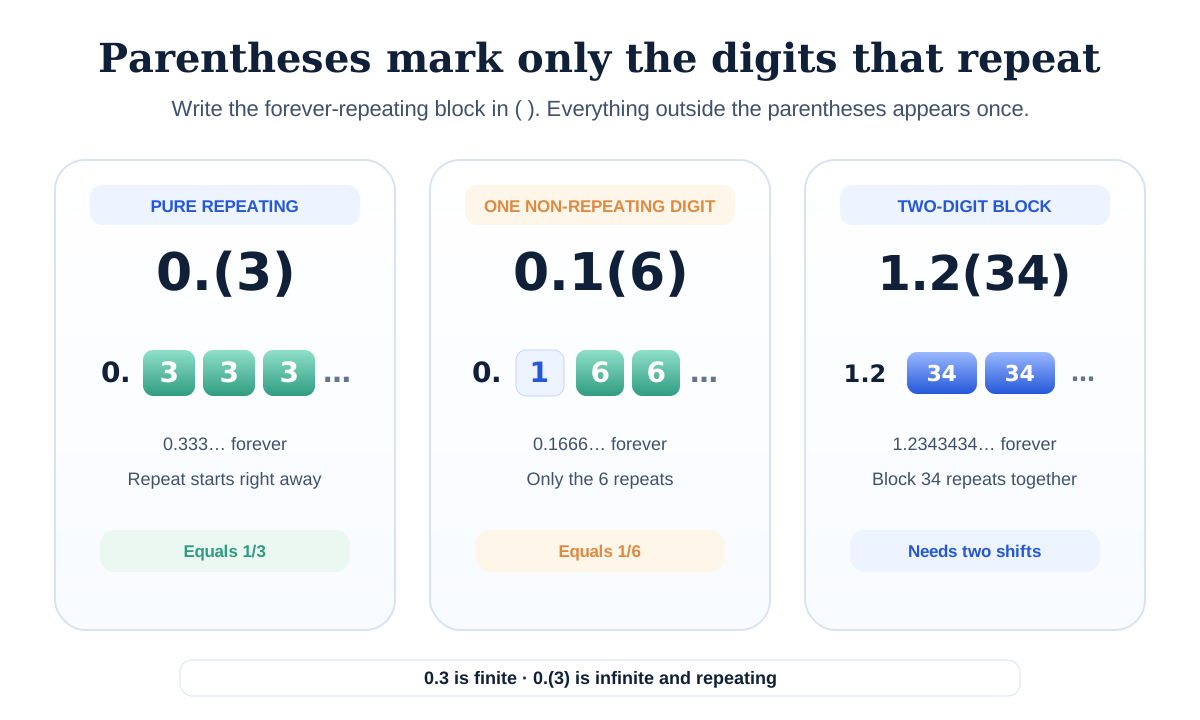
Use parentheses for the digits that repeat. For example, 0.(3) means 0.333… and 1.2(34) means 1.2343434…
Simplified result
0.(3) = 1/3
Whole number
0
Does not repeat
—
Repeats
3
See the cancellation
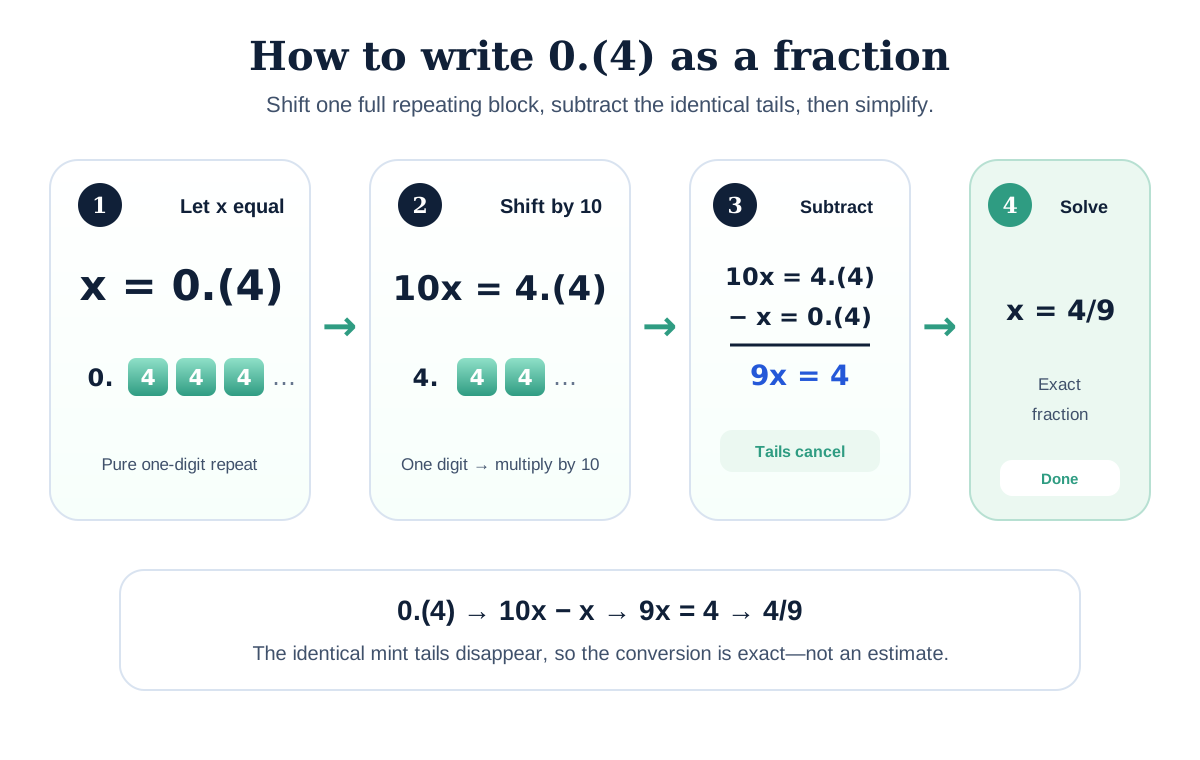
The mint blocks are identical copies of the repeating digits. The two shifts place them in the same position, so subtraction removes the infinite tail exactly.
Quick answer
To turn a repeating decimal into a fraction, let x equal the decimal, shift it until one full repeating block lines up, subtract the matching equations, and simplify the fraction that remains. This works because subtraction removes the identical digits that repeat forever.
For a pure repeating decimal such as 0.(4), the answer is 4/9. For a decimal with a non-repeating beginning, such as 0.1(6), use two shifts before subtracting; the answer is 1/6. The calculator above does both forms and shows the exact fraction instead of a rounded approximation.
Input format
A recurring decimal is an infinite decimal with a digit or group of digits that repeats without stopping. Parentheses are a keyboard-friendly way to show the repeating part. They also prevent a common mistake: treating a finite decimal such as 0.3 as if it were the recurring decimal 0.(3).
0.(3)
The 3 repeats forever: 0.333.... This is a pure repeating decimal because the pattern starts immediately after the decimal point.
0.1(6)
Only the 6 repeats: 0.1666.... The 1 is a non-repeating prefix, so the conversion needs two decimal shifts.
1.2(34)
The block 34 repeats: 1.2343434.... The whole number and the non-repeating 2 stay part of the exact value.
The method
The reliable method for how to write a repeating decimal as a fraction is to use algebra, not guesswork. Let x stand for the decimal. Then multiply x by a power of ten so that one full copy of the repeating block moves to the left of the decimal point. If there are digits before the repeat, make a second, smaller shift that keeps those digits in the same position.
Now subtract the equations. The endlessly repeated tails are identical, so they cancel exactly. What remains is an ordinary whole-number equation that can be solved for x. This is why a decimal recurring to fraction conversion is exact: the method does not cut off the decimal or estimate its value.
Worked examples
These two patterns cover most questions. First decide whether the repeat begins immediately or after one or more non-repeating digits. That single observation tells you whether one shift or two shifts are needed.
When every decimal digit repeats, one shift for each repeated digit is enough. A one-digit repeat creates a denominator of 9 before simplification.
The 1 does not repeat, so use two shifts. The larger shift moves one repeating 6 past the decimal point; the smaller shift keeps the one non-repeating digit aligned.
Important distinction
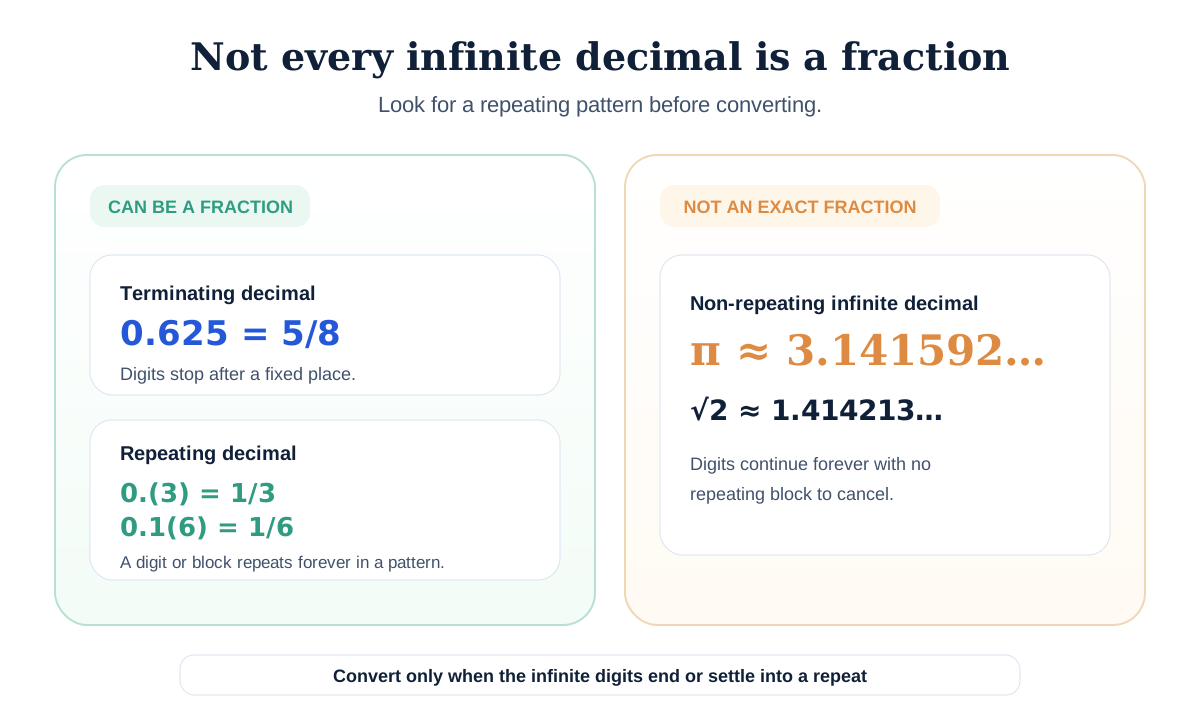
“Infinite decimal” does not always mean “repeating decimal.” A decimal can continue forever in two different ways. A rational number either ends, like 0.625, or repeats in a predictable cycle, like 0.(3), 0.1(6), or 1.2(34). Both kinds can be written exactly as fractions.
An infinite decimal with no repeating pattern is different. Numbers such as pi and the square root of 2 have digits that continue without settling into a repeating block, so no exact numerator-over-denominator fraction exists for them. Before you convert an infinite decimal to a fraction, look for a repeating digit or repeating group.
Check your work
0.3 and 0.(3) are different numbers. The first is three tenths, or 3/10. The second repeats forever and equals one third. Always identify the exact digit or block that repeats before starting the conversion.
In 0.1(6), only the 6 repeats; the 1 appears once. In 0.(16), the two-digit block 16 repeats together: 0.161616.... The number of repeating digits decides how far you shift the decimal point.
The first fraction from the subtraction method may not be in simplest form. For example, 0.1(6) gives 15/90 before simplifying to 1/6. Divide the numerator and denominator by their greatest common factor to finish the answer.
Finite decimal instead?
A number such as 0.625 ends after a fixed number of digits, so it uses a simpler place-value conversion: 0.625 = 625/1000 = 5/8. Use that tool for terminating decimals. Use this page when a digit or block repeats forever and the ordinary place-value method is not enough.
Convert a finite decimal instead →Common questions