
Proper fraction
numerator < denominator
Less than one whole, such as 3/4 or 5/8.
Types of fractions
Learn the proper fraction definition in math, identify proper fractions quickly, and see how they differ from one whole and improper fractions through clear examples and visual models.
Quick answer
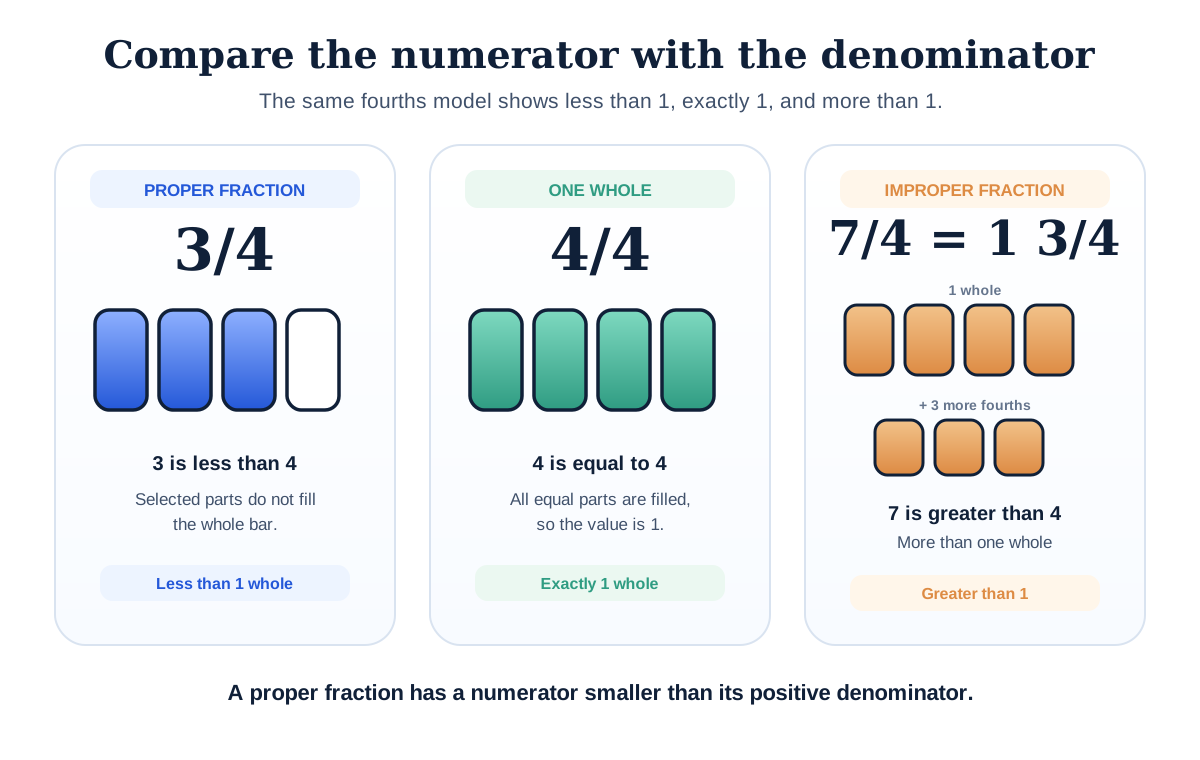
A proper fraction is a fraction with a top number smaller than its bottom number. In 3/4, the numerator is 3 and the denominator is 4. Because three equal parts are fewer than the four equal parts needed to make one whole, 3/4 is less than 1.
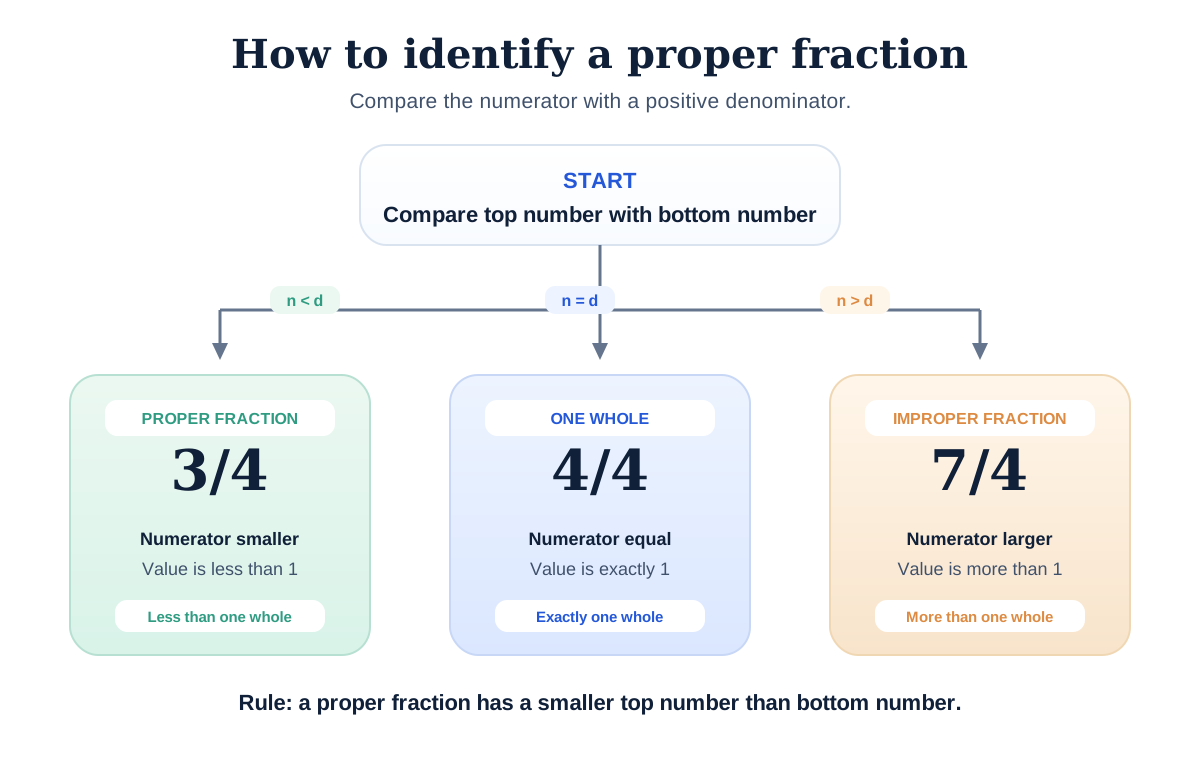
The fastest proper fraction math check is to compare the numerator and denominator. If the numerator is smaller, the fraction is proper. If the numbers match, the fraction equals one whole. If the numerator is larger, the fraction is improper.
Definition
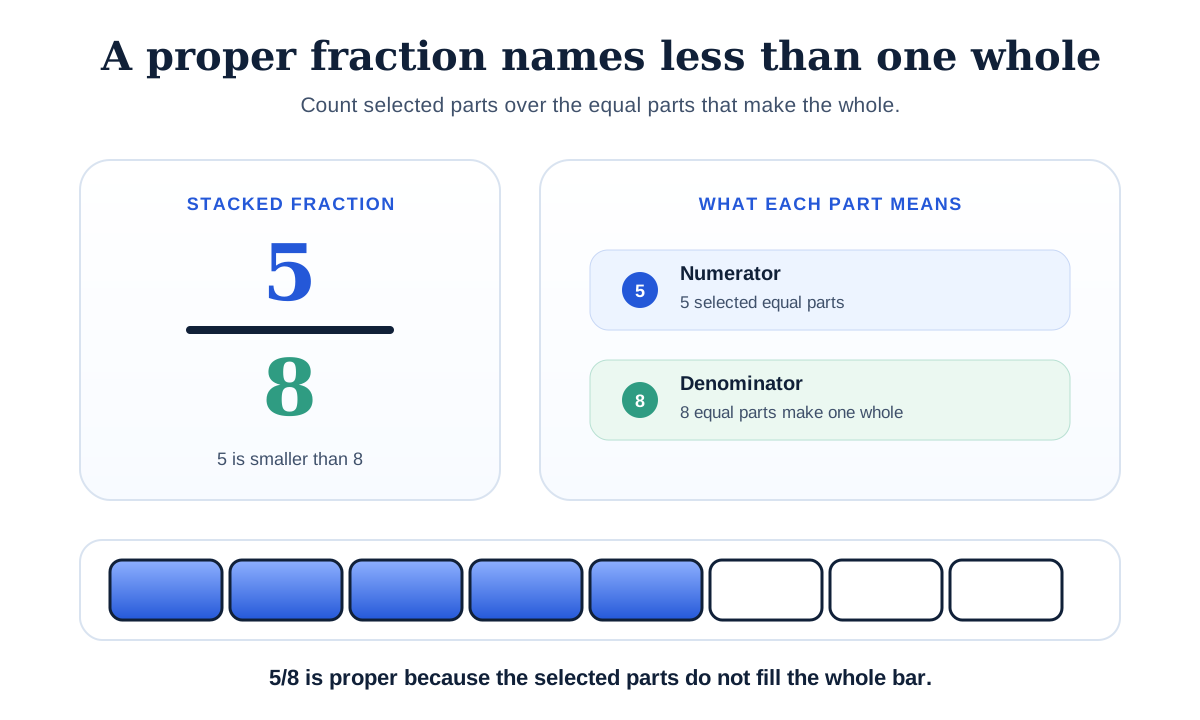
The proper fraction definition is simple: a fraction is proper when its numerator is less than its denominator. The numerator is the top number, and it tells how many equal parts are counted. The denominator is the bottom number, and it tells how many equal parts make one whole. When the top number is smaller, not all parts of the whole have been counted.
Proper fractions always have a value less than one whole. That does not mean every proper fraction is small in the everyday sense. The fraction 99/100 is a proper fraction and is very close to one, but it is still less than one because 99 is smaller than 100. The comparison of the two numbers, not how large they look, gives the classification.
Identify it
Start by checking that the denominator is positive. Then compare the top and bottom numbers. A fraction such as 5/8 is proper because 5 is less than 8. A fraction such as 8/8 is exactly one whole, so it is not proper. A fraction such as 9/8 is improper because it contains more equal parts than fit in one whole.
This check works even when a fraction can be simplified. For example, 6/8 is proper because 6 is less than 8. Simplifying it gives 3/4, which is also proper. Simplifying changes the fraction name, but not the fact that its value is less than one.
Proper and improper fractions
numerator < denominator
Less than one whole, such as 3/4 or 5/8.
numerator = denominator
Exactly one whole, such as 4/4 or 10/10.
numerator > denominator
One whole or more, such as 7/4 or 11/6.
Proper and improper fractions are two ways of classifying fraction size. Both are valid mathematical forms. A proper fraction is easier to recognize as a part of one whole, while an improper fraction is useful when an amount reaches or passes one whole. A mixed number is another way to write many improper fractions, but it is not a separate value.
Examples
Use the same check in each example: compare the fraction top number with the denominator. If the numerator is smaller, the fraction is proper and its value lies between zero and one.
1/2
One of two equal parts is counted. 1 is smaller than 2, so the fraction is proper.
3/5
Three of five equal parts are counted. 3 is smaller than 5, so the value is below one whole.
6/8
Six is smaller than eight, so 6/8 is proper. It can simplify to 3/4, which is also proper.
9/10
Nine tenths is close to one whole but still less than one because 9 is smaller than 10.
Fraction top number
The fraction top number is called the numerator. In a proper fraction, it counts selected equal parts but stays smaller than the denominator. In 4/7, the top number 4 means four seventh-sized parts are counted. Because four is less than seven, the amount has not yet reached one whole.
The numerator must be read together with the denominator. Three can mean three halves, three fourths, or three eighths, and those are different amounts. The denominator tells the size of each unit; the numerator tells how many of those units are counted. A picture or number line makes that relationship easier to see.
Types of fractions
Proper fractions are one major type of fraction. A unit fraction such as 1/6 is also proper because its numerator is less than its denominator. Equivalent fractions can also be proper: 1/2 and 2/4 name the same proper amount. A fraction may have more than one useful label at the same time.
Improper fractions and mixed numbers describe values of one whole or more, so they are not proper. Learning this classification helps with later fraction work: comparing size, converting mixed numbers, adding fractions, and deciding whether an answer makes sense.
Keep learning
Use the Types of Fractions guide to compare proper fractions, improper fractions, mixed numbers, unit fractions, and equivalent forms with the same visual checks.
Explore types of fractions →Common questions