
Written fraction
3/4
A compact typed form. The slash takes the place of a horizontal fraction bar when space is limited.
Fraction notation
Learn what a fraction symbol means, how to write the correct fraction format, and how the numerator, fraction bar, and denominator connect to one clear model.
Fraction format
Change the two numbers to see what each part of a fraction means. The top number counts selected equal parts; the bottom number counts all equal parts in one whole.
Fraction format: 3/4
Read it as “3 out of 4 equal parts.”
Example of a fraction
Numerator
The top number, 3, tells how many equal parts are selected or counted.
Fraction bar
The line keeps the two jobs separate. Later, it can also mean division.
Denominator
The bottom number, 4, tells how many equal parts make one whole.
Equal-parts model
3 of the 4 equal parts are selected. If the numerator is greater than the denominator, the fraction represents one whole or more.
Quick answer
A fraction symbol shows a relationship between equal parts and one whole. The top number is the numerator: it tells how many equal parts are counted. The bottom number is the denominator: it tells how many equal parts make the whole. The fraction bar keeps those two meanings together as one number.
In 3/4, four equal parts make the whole and three parts are counted. The symbol is not just two numbers with a line between them; it is a short way to record a picture, a sharing situation, or a place on a number line.
The three parts
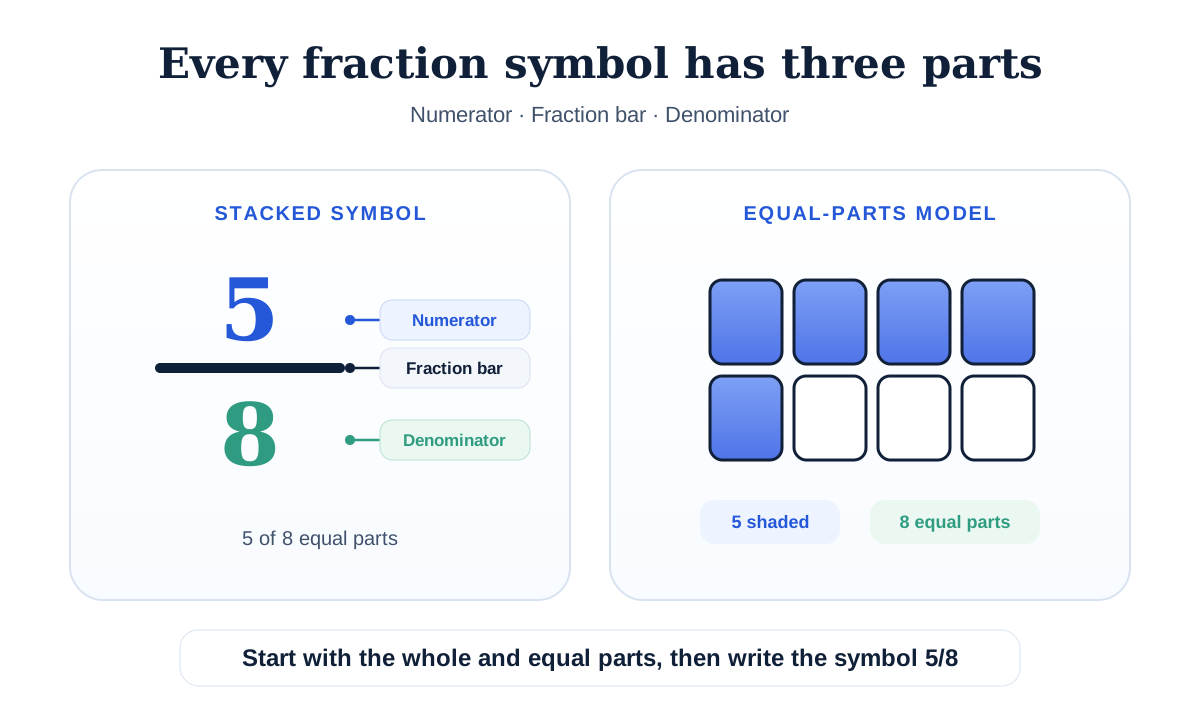
Every basic fraction has three visual parts. The numerator is the number above the bar. The denominator is the number below the bar. The fraction bar is the horizontal line that links them. When children identify each part from a picture, they can write a fraction without guessing which number belongs on top.
Start with the denominator because it describes the complete structure. If a rectangle is divided into eight equal boxes, the denominator is 8. Next count the selected boxes. If five are shaded, the numerator is 5. The resulting fraction symbol, 5/8, means five of eight equal parts. Equal is essential: unequal pieces do not make reliable fraction parts.
Fraction format
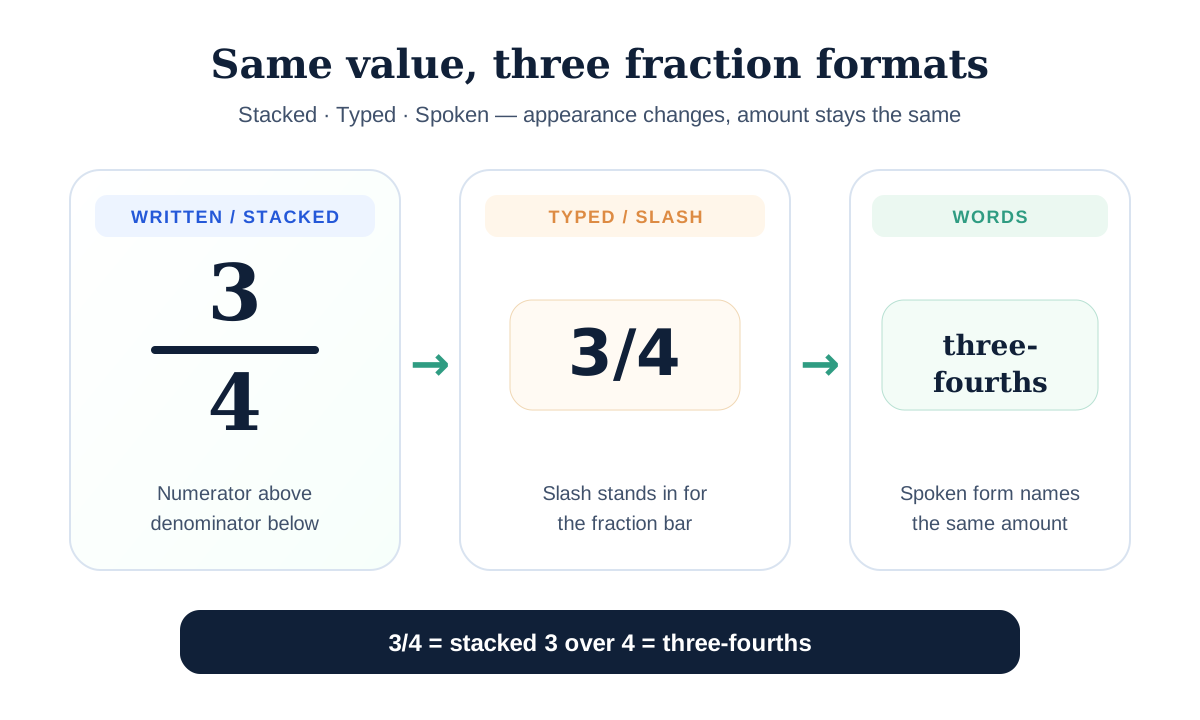
The standard fraction format places the numerator above a horizontal fraction bar and the denominator below it. In a worksheet, keep the numbers centered so the fraction is easy to read. On a keyboard, use a slash: 3/4. The format changes the appearance, not the value. Whether it is stacked, typed, or spoken as three-fourths, the same fraction describes the same amount.
Written fraction
3/4
A compact typed form. The slash takes the place of a horizontal fraction bar when space is limited.
Stacked fraction
3 over 4
The classroom format: 3 sits above a horizontal bar and 4 sits below it, making each number’s job easy to see.
Words
three-fourths
The spoken form. The first word names the numerator; the fraction name tells the denominator.
Examples
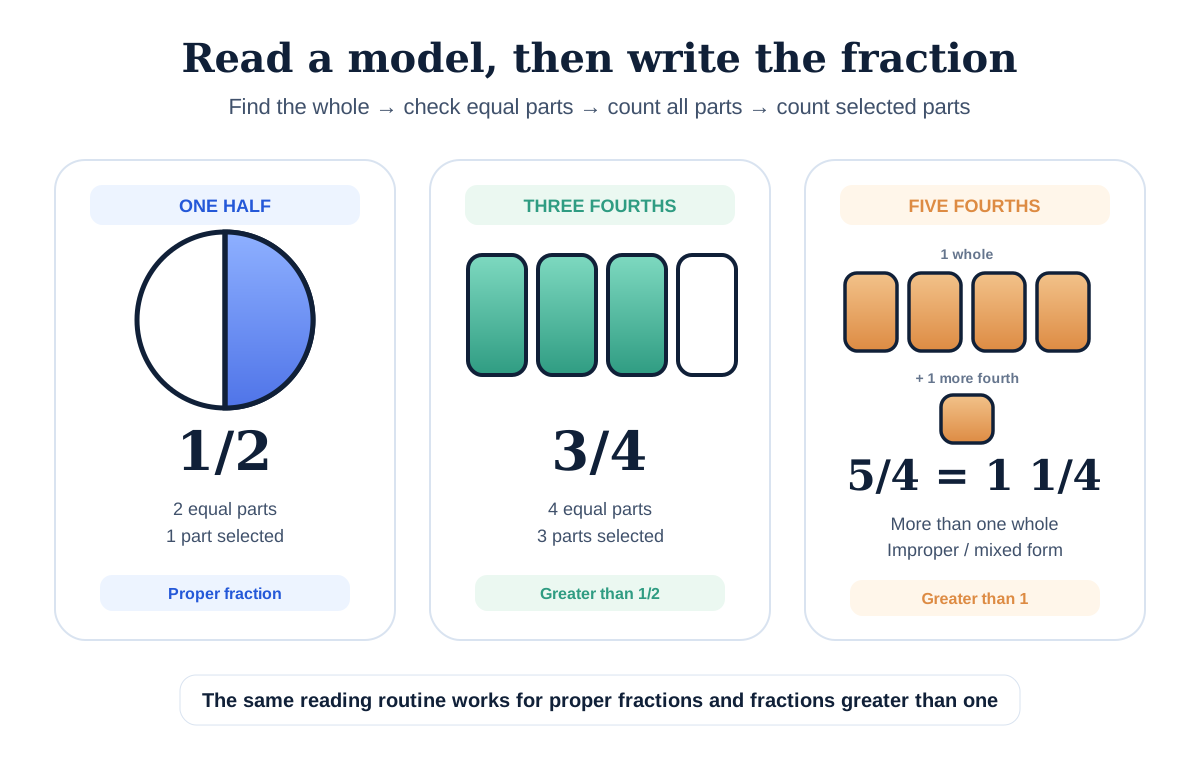
A fraction can describe a shape, a group of objects, a length, or a number-line position. The same reading routine works in every example: find the whole, check that its parts are equal, count all equal parts for the denominator, and count the parts being described for the numerator.
1/2
One whole is divided into two equal parts. The numerator 1 means one part is selected; the denominator 2 means two equal parts make the whole.
3/4
One whole is divided into four equal parts. The numerator 3 counts three selected parts, so 3/4 is greater than one half but less than one whole.
5/4
Fractions can be greater than one. Five fourths means one complete group of four fourths plus one more fourth, which is 1 1/4.
Avoid mix-ups
If five of eight equal boxes are shaded, write 5/8, not 8/5. Count all equal parts before selected parts.
Four visible pieces are not automatically fourths. The pieces must be the same size or represent equal units.
The fraction bar is part of one number. It separates the amount counted from the total equal parts and later also represents division.
Next step
Once the fraction symbol makes sense, practice turning a shaded model or a phrase such as three-fourths into the correct notation. Reading, writing, and drawing the same fraction build a dependable foundation for every later fraction topic.
Learn how to write fractions →Common questions