
LumaMathLumaMathParent-friendly math tools

Understanding fractions · a fraction is a part of

A Fraction Is a Part of a Whole

A fraction is a part of a whole when the whole has been divided into equal parts. The fraction tells how many equal parts make the whole and how many of those parts are being counted.

Explore the main fraction lesson

Quick answer

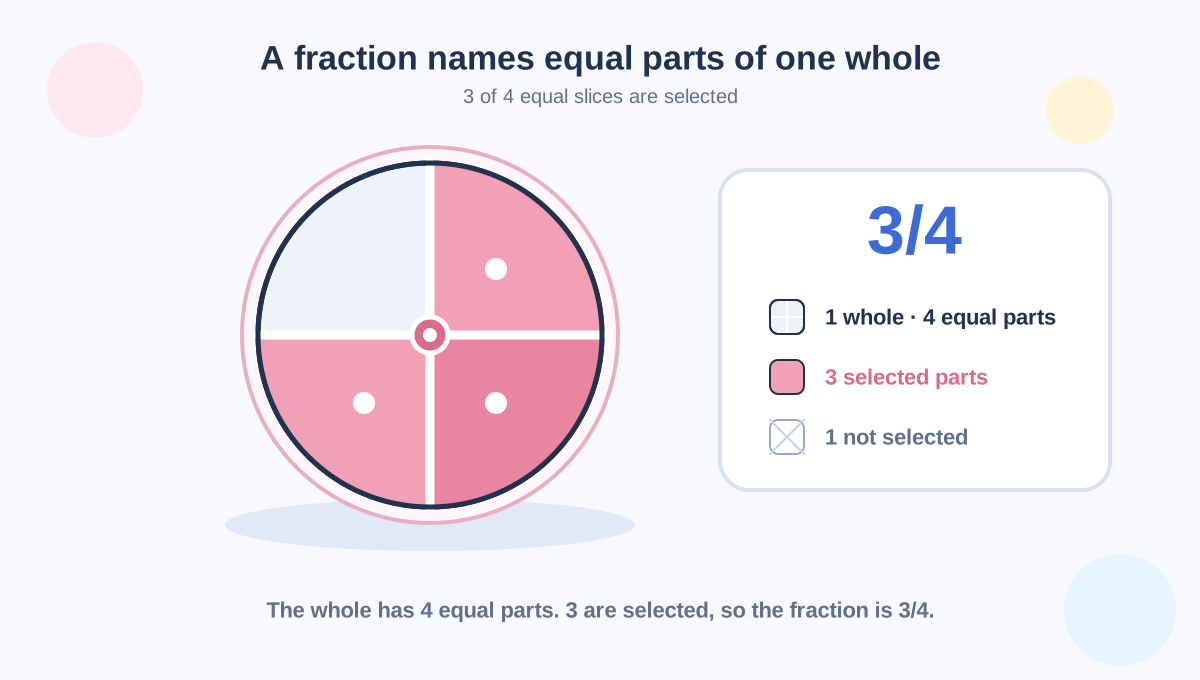
A fraction is a part of one whole, one group, or one length divided into equal parts. In 3/4, the whole has four equal parts and three of those parts are counted.

One birthday cake divided into four equal slices with three pink slices selected, showing that three fourths is part of a whole.
A fraction describes selected equal parts in relation to one complete whole, such as three of four equal cake slices.

A fraction needs a complete whole

A fraction always describes a relationship to a whole. The whole might be one circle, one rectangle, one sandwich, one cup, one distance, or one group of matching objects. Before naming any fraction, ask what complete amount the model is showing. Without a whole, a shaded piece has no precise fraction name.

For example, one slice can mean one-half when a pizza is divided into two equal slices. The same-looking slice could mean one-fourth if the whole pizza is divided into four equal slices. The piece alone does not decide the fraction. The complete whole and the way it is divided decide what the piece represents.
Equal parts make a fraction fair

Fractions describe equal shares. If a shape is cut into four pieces but one piece is much larger, the four pieces do not make four fair fourths. There may be four visible sections, but they represent different amounts, so counting them as equal fraction parts would be misleading.

A useful question for children is, “Would everyone receive the same amount if these pieces were shared?” If the answer is yes, the parts can represent equal shares. If the answer is no, pause before writing a fraction. The equal-parts check comes before counting shaded or selected pieces.

What does the denominator represent?

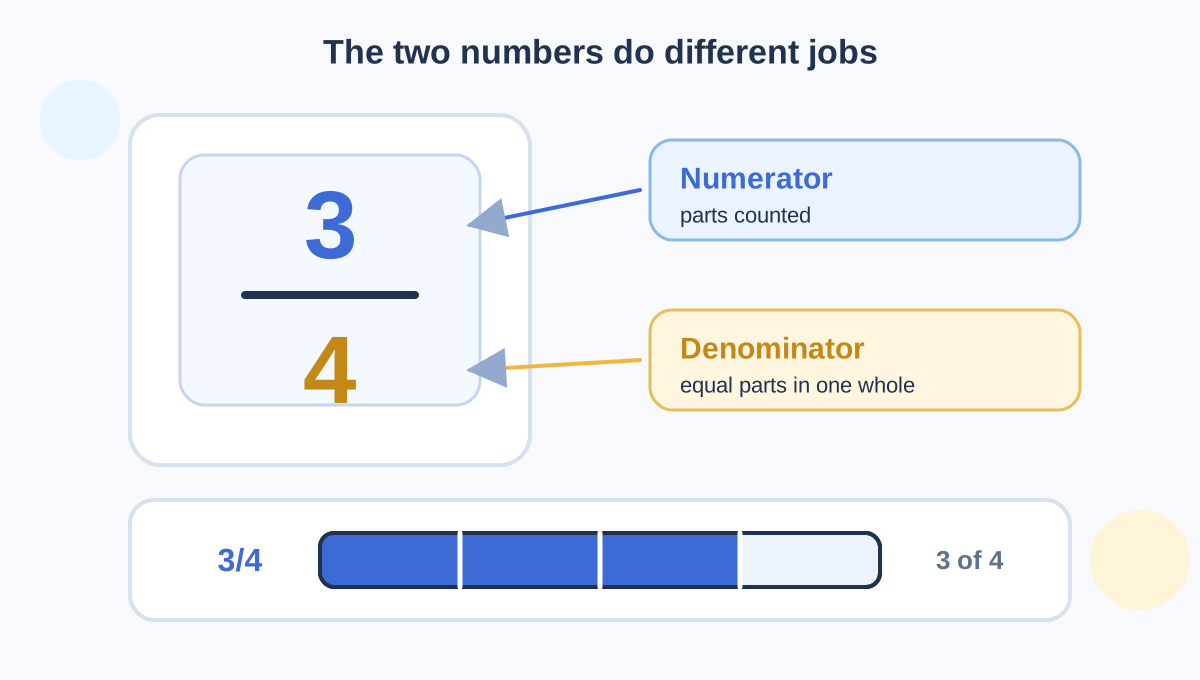
The denominator is the bottom number in a fraction. It tells how many equal parts make one whole. In 3/4, the denominator is 4 because the whole has been split into four equal parts. The denominator does not tell how many pieces are shaded; it describes the complete structure of the whole.

The denominator also helps name the parts. When the denominator is 2, the parts are halves. When it is 3, the parts are thirds. When it is 4, the parts are fourths. A child can look at the denominator and ask, “How many equal pieces does it take to make the whole again?”

What is the top number in a fraction called?

The top number in a fraction is called the numerator. It tells how many equal parts are being counted. In 3/4, the numerator is 3 because three of the four equal parts are selected, shaded, used, or described.

The numerator only makes sense after the denominator has named the equal part. Three can mean three halves, three fourths, or three eighths depending on the denominator. Help a child say the complete idea: “Three fourths means three parts that are each one fourth of the whole.”

How fractions represent shapes, sets, and lengths

A shaded shape is one common fraction representation. If three of five equal boxes are colored, the colored amount is 3/5. The same reasoning works with circles, strips, and number line intervals as long as the parts are equal.

Fractions can also represent part of a set. If three of eight matching counters are blue, the blue counters are 3/8 of the group. In a set, each object must count as one equal unit. Fractions can describe length too: a ribbon divided into four equal sections has four fourth-length pieces.

The whole can change the fraction name

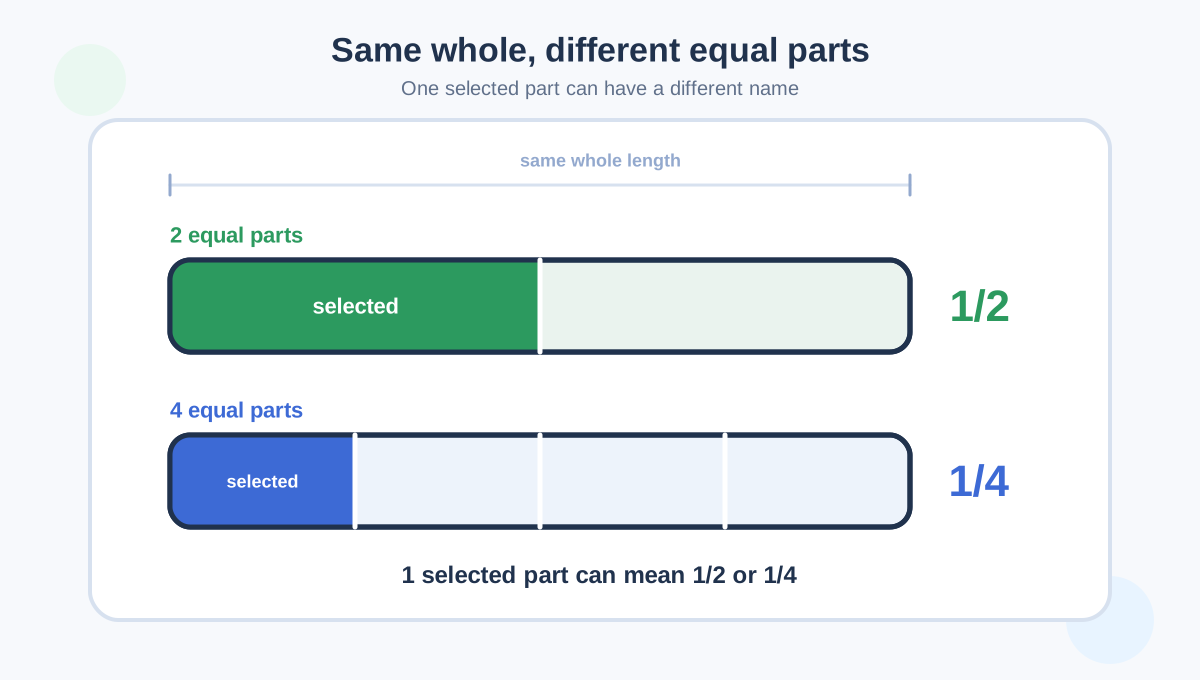
One selected part does not always have the same fraction name. One piece from a whole split into two equal parts is 1/2. One piece from a whole split into four equal parts is 1/4. Both examples have one selected piece, but the wholes are divided differently.

This is why it helps to say the denominator in words. “One half” means one of two equal parts. “One fourth” means one of four equal parts. The denominator tells the size of the unit being counted, not only a position at the bottom of a symbol.

Fractions can equal one whole

A fraction does not have to be less than one. When every equal part is counted, the fraction equals one whole. Two halves, written 2/2, make one whole. Four fourths, written 4/4, also make one whole. Nothing is missing because every equal part has been included.

These examples help children see why the numerator and denominator can match. The denominator tells how many parts make the whole, and the numerator tells how many parts are counted. When both numbers are the same, all parts of the whole are counted.

Use the model to check the words

When children mix up numerator and denominator, return to the picture. Ask them to point to all equal parts first, then point to the selected parts. A sentence such as “four equal parts altogether, three selected” leads naturally to 3/4. The model can check whether the written numbers are in the correct places.

This same check works for almost every beginning fraction question. Find the whole, check equality, count all equal parts, and count the selected parts. Once that routine feels familiar, fraction vocabulary becomes a way to describe what the child already understands.

Step by step

Use this sequence with your child

  1. 1

    Name the whole

    Identify the complete shape, group, length, or amount before looking at any part.

  2. 2

    Check equal parts

    Make sure every part has the same size or every object has the same value.

  3. 3

    Read the denominator

    Use the bottom number to name all equal parts that make one whole.

  4. 4

    Read the numerator

    Use the top number to name how many of those equal parts are counted.

A fraction card for three fourths with colorful numerator and denominator labels and a matching four-part model.
The numerator counts selected parts. The denominator names all equal parts that make the whole.

Example

A shape model

A circle is divided into four equal pieces and three are shaded. The shaded part is 3/4 of the whole circle.

Example

A set model

Five of ten matching counters are red. The red counters are 5/10 of the complete set, which is also one-half.

Matching-length fraction strips divided into two and four equal parts, showing one half and one fourth.
One selected part has a different fraction name when the same whole length is divided into a different number of equal parts.

Tips for Parents

  • Ask “what is the whole?” before asking your child to count pieces or read a fraction.
  • Use the phrase “equal shares” often, because it gives the word fraction a concrete meaning.
  • Point to the bottom number and ask how many equal parts make the whole; then point to the top number and ask how many are counted.
  • Use 2/2 and 4/4 to show that fractions can equal one whole, not only amounts less than one.

Common questions

A Fraction Is a Part of a Whole FAQ

A fraction is a part of one whole, one group, or one length divided into equal parts.