
LumaMathLumaMathParent-friendly math tools

Understanding fractions · how to explain fractions

How to Explain Fractions

The clearest way to explain fractions is to start with one whole, show equal parts, and say how many parts are being counted. A short explanation connected to a picture helps children understand the meaning before they memorize vocabulary or rules.

Explore the main fraction lesson

Quick answer

Explain a fraction by saying: “The whole is split into ___ equal parts, and ___ parts are being counted.” The total equal parts are the denominator, and the parts counted are the numerator.

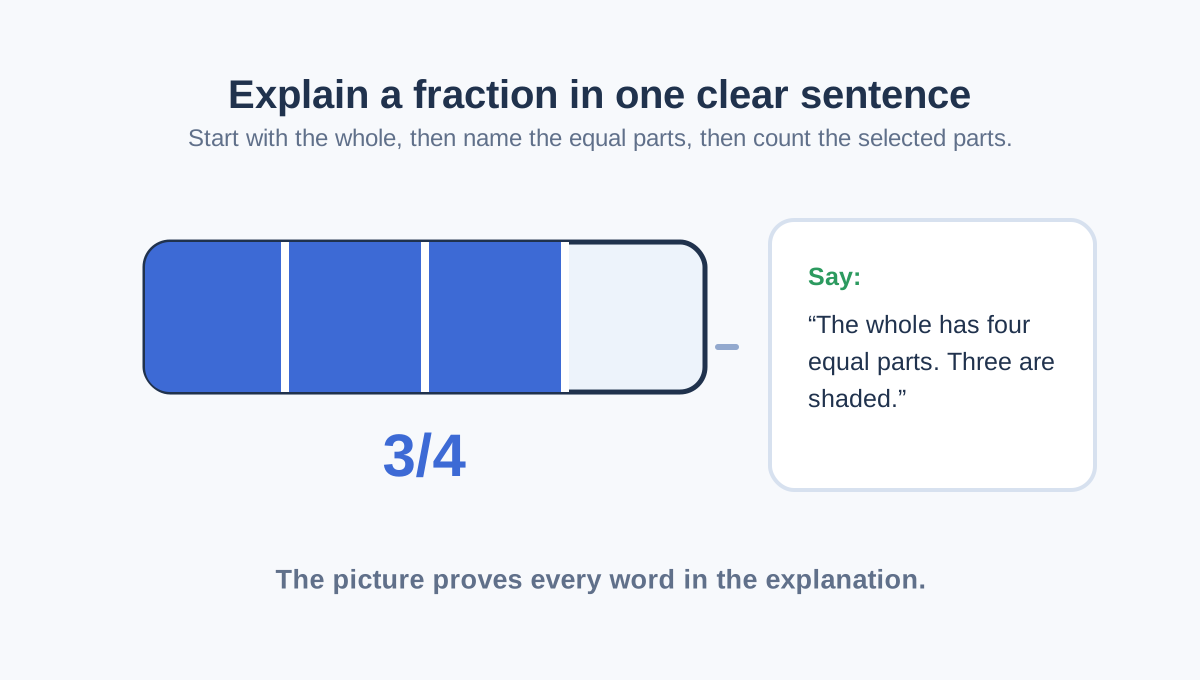
A bar split into four equal parts with three shaded, next to a simple sentence explaining three fourths.
A helpful explanation starts with the whole and lets the model show where both numbers come from.

Explain the picture before the symbol

When a child sees 3/4, they may first see two numbers and a line. Begin with the model instead. Show one bar divided into four matching sections, with three sections shaded. Then say, “This is one whole. It is split into four equal parts. Three of those parts are shaded.” Only after that sentence should you point to the symbol 3/4.

This approach gives every part of the notation a visible meaning. The 4 is not only the number on the bottom; it describes the four equal parts that make the whole. The 3 is not only the number on the top; it describes the three parts being counted. The fraction symbol becomes a short way to record an idea the child has already seen.
Start every explanation with the whole

A fraction always belongs to a whole. The whole might be one rectangle, one sandwich, one measuring cup, or one group of matching objects. Before asking a child to name a fraction, ask, “What is the whole in this picture?” This question prevents a common mistake: counting shaded pieces without noticing what complete amount they belong to.

The whole can change the meaning of the same-looking piece. One pizza slice may be one-fourth if the pizza was divided into four equal slices, but one-eighth if it came from eight equal slices. Naming the whole first shows children that a fraction is a relationship, not just a label placed on a piece.

Make equal parts the key idea

Fractions describe equal shares. A rectangle split into one wide piece and three narrow pieces does not show fourths, even though it has four pieces. Explain this in everyday language: if four people share something, each person should receive a fair share. Equal parts are what make the share fair.

Rather than telling a child that a picture is wrong, ask a question they can answer by looking: “Would these pieces give everyone the same amount?” When a child notices unequal pieces for themselves, they understand why equal parts matter. That idea will later support equivalent fractions, comparison, and operations.

Use questions instead of a long lecture

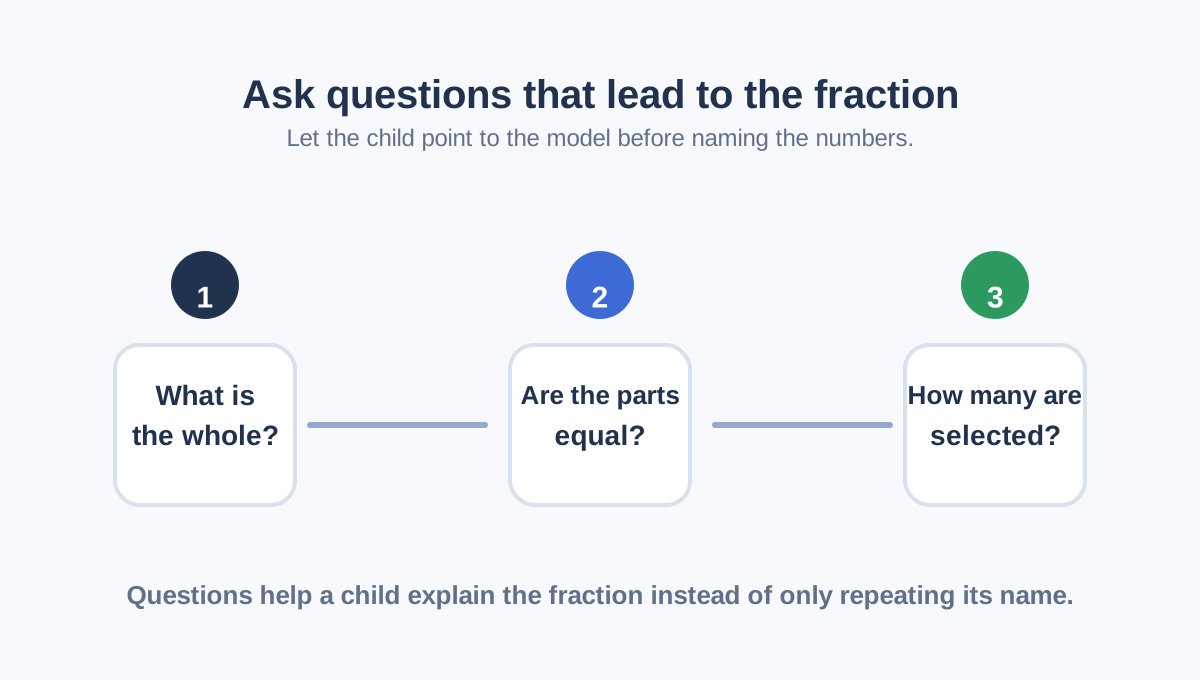
Questions turn a fraction explanation into a conversation. Ask: “What is the whole?” “Are the parts equal?” “How many equal parts are there altogether?” and “How many are shaded or chosen?” These questions guide children toward the numerator and denominator without asking them to repeat a definition they may not understand yet.

Wait for the child to point and answer before supplying the words. If they say there are four equal parts and three are shaded, respond, “Exactly. That is three-fourths.” This lets the child build the sentence first and attach the mathematical name second. It is often more effective than beginning with the words numerator and denominator.

Use everyday examples carefully

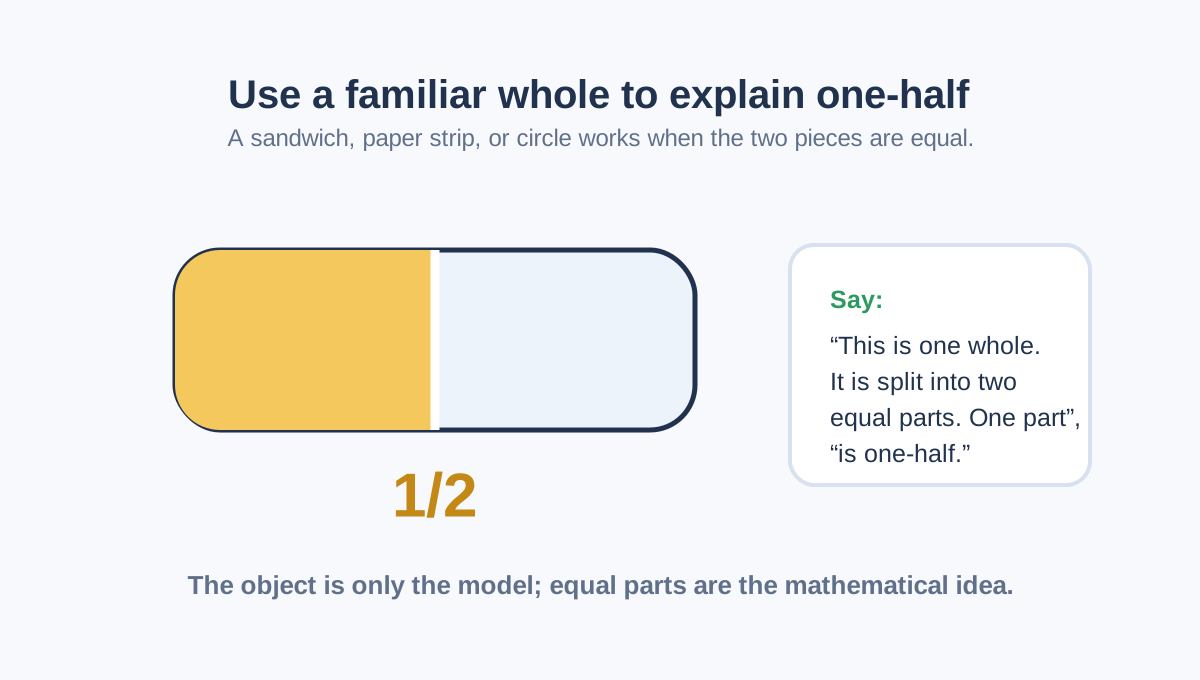
Food, paper, and small objects can make fractions feel real. One sandwich cut into two equal pieces is a useful way to explain one-half. A strip of paper folded into four equal sections works well for fourths. Eight matching buttons can show that three blue buttons are 3/8 of a complete group.

The example must stay mathematically clear. A sandwich cut into uneven pieces can confuse the idea of half, and a group with objects of very different sizes may not show equal units. Use a real object to start the conversation, then draw a simple bar or circle so the equal parts remain easy to see.

Introduce vocabulary after the meaning is clear

Once a child can explain a model in ordinary words, add the formal vocabulary. You can say, “The bottom number is called the denominator. It tells how many equal parts make the whole. The top number is the numerator. It tells how many of those parts we are counting.”

Keep the vocabulary attached to the model every time you use it. Instead of asking, “What is a denominator?” in isolation, point to 4 in 3/4 and ask, “What does this 4 tell us about the bar?” A child who can answer “four equal parts make the whole” understands more than a child who only knows a memorized word.

Respond calmly when a child is confused

If a child reverses 3/4 and 4/3, do not correct only the order of the numbers. Return to the model and say, “Let’s count the equal parts in the whole first. Now let’s count the shaded parts.” The picture makes the correct placement visible without making the child feel that they simply forgot a rule.

If fractions feel difficult, make the example smaller rather than explaining more at once. Return to one-half or one-fourth, use a clear whole, and ask the same two or three questions. Repeated visual language builds confidence. Later fraction rules make more sense when the meaning of a fraction is already steady.

Step by step

Use this sequence with your child

  1. 1

    Show the whole

    Point to one complete object, shape, group, or amount before naming any fraction.

  2. 2

    Check equal parts

    Ask whether every part is the same size or every object counts as an equal unit.

  3. 3

    Ask what is counted

    Have your child count the shaded, selected, or used equal parts.

  4. 4

    Connect words and symbols

    Say the full sentence first, then write and read the fraction together.

Three parent prompts: what is the whole, are the parts equal, and how many are selected.
Short questions guide a child to explain the fraction in their own words.

Example

Explain 3/4

“The whole bar is divided into four equal parts. Three parts are shaded, so this is three-fourths.”

Example

Explain 1/2

“This sandwich is one whole. It is split into two equal parts. One part is one-half.”

One whole rectangular sandwich split into two equal parts with one part shaded, showing one half.
Everyday objects work well when the whole and the equal shares are visible.

Tips for Parents

  • Use the same simple sentence structure each time: whole, equal parts, selected parts.
  • Ask questions and let your child point to the model before introducing formal vocabulary.
  • Choose one clear visual instead of moving quickly between several examples.
  • When a child is stuck, return to one-half or one-fourth rather than adding more rules.

Common questions

How to Explain Fractions FAQ

Start with one whole, split it into equal parts, and say how many of those parts are being counted before showing the fraction symbol.