
LumaMathLumaMathParent-friendly math tools

Understanding fractions · how to teach fractions

How to Teach Fractions

The best way to teach fractions is to start with a whole your child can see, divide it into equal parts, and talk about the parts before introducing rules. This approach makes the numbers in a fraction mean something.

Explore the main fraction lesson

Quick answer

To teach fractions, begin with one whole, split it into equal parts, count the total parts, then count the selected parts. Say what the picture shows before asking a child to write a fraction symbol.

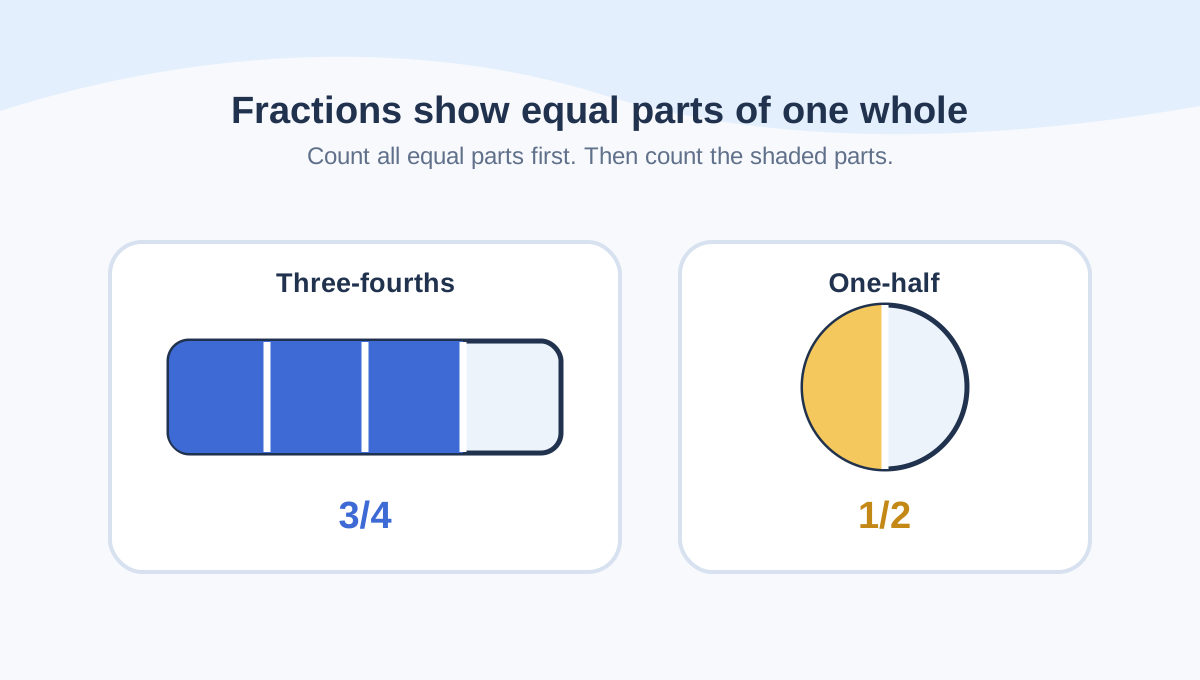
A fraction bar split into four equal parts with three shaded, alongside a circle split into two equal halves with one shaded.
Begin with a whole and equal parts. In the bar, three of four equal parts are shaded; in the circle, one of two equal parts is shaded.

Start with meaning instead of a rule

Children often see a fraction as two numbers with a line between them. Start somewhere more concrete: one sandwich, one rectangle, or one group of counters. Ask, “What is the whole?” before you ask for any numbers.

Once the whole is clear, make or draw equal parts. A fraction is not simply a count of pieces. It describes equal shares of the same whole, which is why checking the size of every part matters first.
Use language your child can repeat

Say “three out of four equal parts” before saying “three-fourths.” This sentence gives the numerator and denominator a job. The denominator tells how many equal parts make the whole; the numerator tells how many are being counted.

Keep asking the same two questions: “How many equal parts are there altogether?” and “How many parts are we counting?” Repeated, calm language is more useful than a long definition.

Move from hands-on models to drawings

A real object is a useful first model, but a drawing is the bridge to a worksheet. Fold a strip of paper in half, in thirds, or in fourths. Then unfold it and shade parts while your child watches. The folds make the equal-size requirement easy to see, and the drawing remains after the snack or blocks have been put away.

After a child can explain a folded paper model, switch to simple bars and circles. Bars are especially helpful because equal sections are easy to compare. Circles are useful too, but only when the slices are clearly equal. Ask your child to connect the object, the drawing, the spoken sentence, and the written symbol. These are four views of the same idea, not four separate skills.

Build understanding with carefully chosen examples

Begin with unit fractions such as 1/2, 1/3, and 1/4. They let a child focus on the size of one equal part. Then use fractions with the same denominator, such as 1/4, 2/4, and 3/4, so the child can see that the parts do not change size; only the number of parts being counted changes.

Include one whole early. Four-fourths is not a trick or an exception: all four equal parts together make the original whole. This helps children avoid the common belief that every fraction must be smaller than one. It also prepares them for improper fractions and mixed numbers later.

Respond to mistakes without turning them into rules

When a child reverses 3/4 and 4/3, return to the picture instead of correcting only the positions. Ask them to show the total number of equal parts and then the number selected. Let the model supply the answer. Over time, the numerator and denominator stop being positions to memorize and become labels for things the child can point to.

If a child counts unequal pieces, praise the counting and then ask whether every piece would be a fair share. Compare two simple drawings: one with four matching parts and one with four uneven parts. A child who can explain why the uneven model is not fourths has learned something more durable than a shortcut.

Step by step

Use this sequence with your child

  1. 1

    Show one whole

    Use one shape, snack, cup, or set so the child knows what amount is being divided.

  2. 2

    Make equal parts

    Fold, draw, or arrange the model so every part is the same size.

  3. 3

    Name the fraction

    Count all equal parts first, then count the selected parts and write the fraction.

  4. 4

    Ask for an explanation

    Have your child say the meaning back in words instead of only reading the symbol.

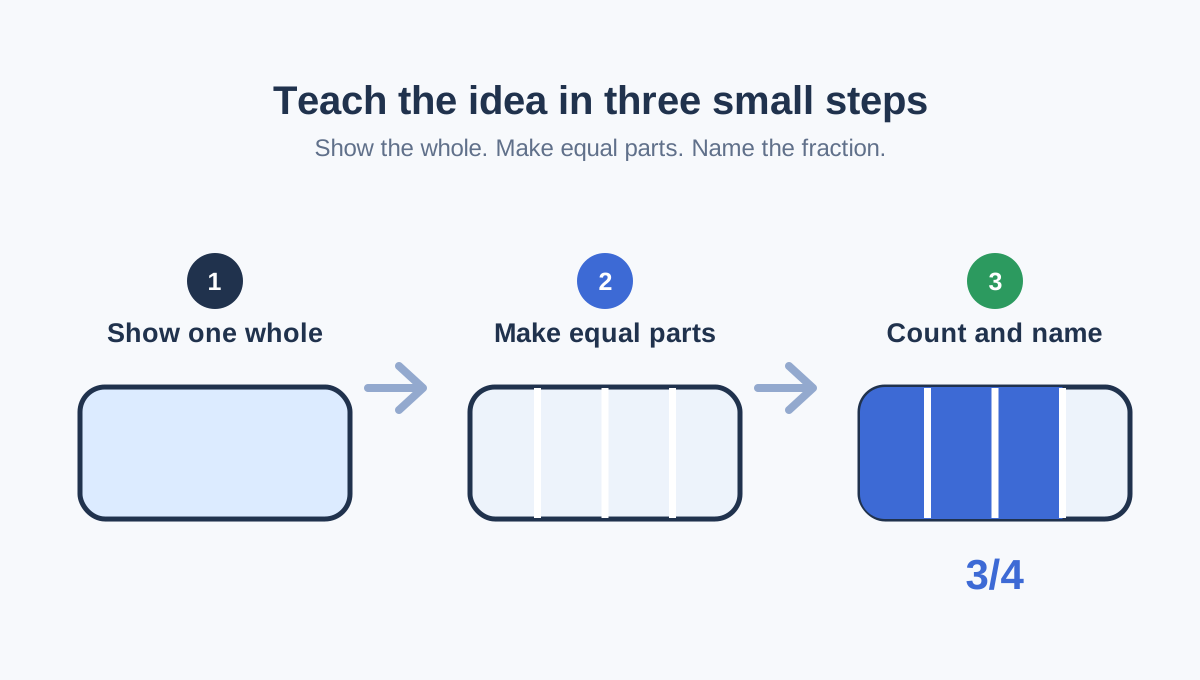
A visual sequence showing a whole bar, a bar split into equal parts, three selected parts, and the fraction three fourths.
A useful teaching sequence: show the whole, make equal parts, count the selected parts, then write the fraction.

Example

Teach 3/4 with a bar

Draw one bar split into four equal boxes. Shade three and say, “Three of the four equal parts are shaded.”

Example

Teach 1/2 with food

Cut a sandwich into two matching pieces. One piece is one-half because the whole has two equal parts.

Tips for Parents

  • Use one clear model at a time; a simple bar is often easier to discuss than a busy worksheet.
  • Do not move on when parts are unequal. That misconception makes later fraction work much harder.
  • Ask your child to point to the whole and the equal parts before saying numerator or denominator.
  • Let your child draw the model. Explaining their own picture shows more understanding than copying yours.

Common questions

How to Teach Fractions FAQ

Teach that a fraction describes equal parts of one whole. The whole and equal parts should make sense before vocabulary or operations.