
LumaMathLumaMathParent-friendly math tools

Understanding fractions · fraction vocabulary

Fraction Vocabulary

Fraction vocabulary is easier to remember when every word points to something a child can see. Start with one whole and equal parts, then use numerator and denominator to describe exactly what the model shows.

Explore the main fraction lesson

Quick answer

The most important fraction vocabulary words are whole, equal parts, numerator, denominator, fraction bar, unit fraction, equivalent fractions, improper fraction, and mixed number. Each word describes a feature of a fraction or its model.

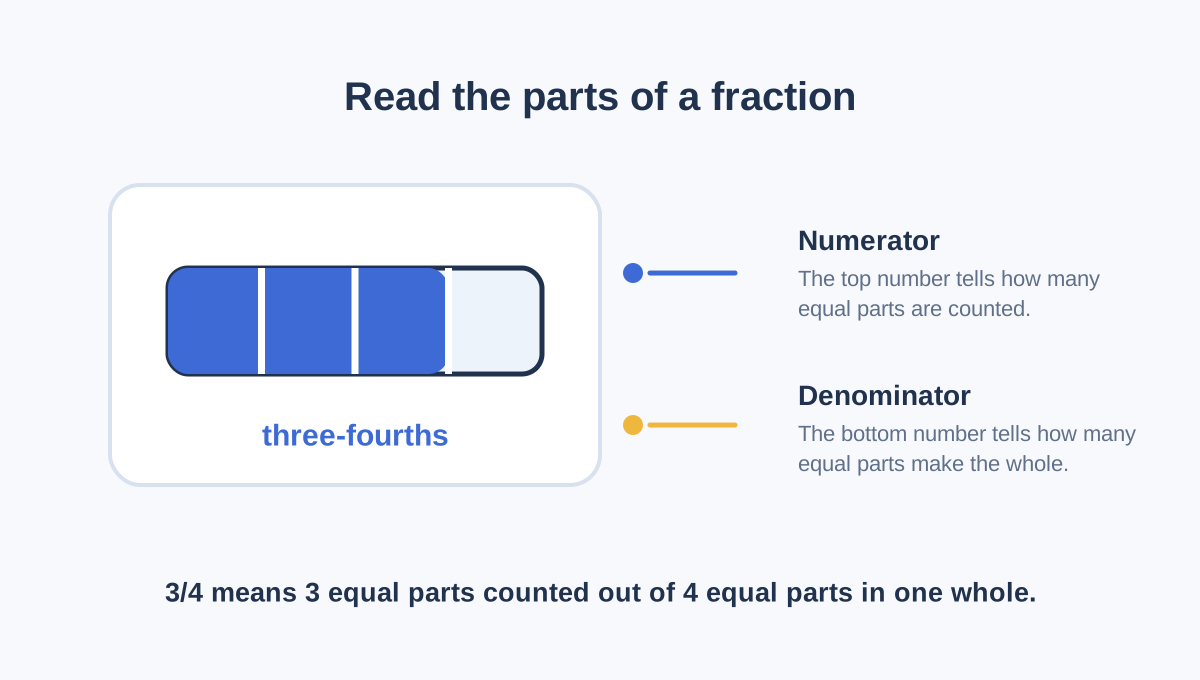
A bar divided into four equal parts with three shaded, alongside explanations of the numerator and denominator in three fourths.
Use a model to show that the numerator counts selected parts and the denominator names all equal parts in the whole.

Start with whole and equal parts

The whole is the complete shape, group, or amount being discussed. It might be one rectangle, one pizza, one cup of liquid, or one group of eight matching counters. A fraction has no clear meaning until the whole is known, because the whole tells you what the parts belong to.

Equal parts are matching shares of the whole. If a bar is divided into four pieces of the same size, each piece is one fourth of the bar. If the pieces are different sizes, they are not fair fourths. This is why “equal parts” is one of the first and most useful fraction vocabulary terms to learn.
Numerator and denominator

The numerator is the top number in a fraction. It tells how many equal parts are being counted. In 3/4, the numerator is 3 because three equal parts are shaded, selected, or being described.

The denominator is the bottom number. It tells how many equal parts make one whole. In 3/4, the denominator is 4 because the whole has four equal parts. A helpful sentence is: “Three parts out of four equal parts.” The three becomes the numerator, and the four becomes the denominator.

What does the fraction bar mean?

The fraction bar is the horizontal line between the numerator and denominator. At the beginning, it helps children read a fraction as one amount made from equal parts. In 3/4, the bar separates the number of parts counted from the number of equal parts in the whole.

Later, children will learn that the fraction bar can also mean division. For now, do not rush that idea. It is more important that a child can look at 3/4 and connect both numbers to a model before using the fraction bar in a calculation.

Unit fractions and fraction names

A unit fraction has a numerator of 1. Examples include 1/2, 1/3, 1/4, and 1/8. A unit fraction names one equal part of a whole. It is a useful starting point because children can focus on the size of a single share before they count several shares.

Fraction names follow the denominator. Two equal parts are halves, three equal parts are thirds, four equal parts are fourths, and five equal parts are fifths. So 1/4 is one-fourth, while 3/4 is three-fourths. Say the name as your child points to the model so the word, picture, and symbol stay connected.

Equivalent fractions name the same amount

Equivalent fractions are different fraction names for the same amount. One-half and two-fourths are equivalent because both cover exactly half of the same whole. The equal parts are a different size, but the amount represented does not change.

Show this with a bar. First split the bar into two equal halves and shade one. Then split a matching bar into four equal parts and shade two. A child can see that 1/2 and 2/4 look different as symbols but occupy the same amount of space.

Improper fractions and mixed numbers

An improper fraction has a numerator greater than or equal to its denominator, such as 5/4 or 4/4. This does not mean the fraction is wrong. Four-fourths equals one whole, and five-fourths means one whole plus one more fourth.

A mixed number combines a whole number and a fraction, such as 1 1/4. It names the same amount as 5/4. Children do not need to master conversion immediately, but knowing these terms helps them understand that fractions can equal or be greater than one whole.

Step by step

Use this sequence with your child

  1. 1

    Point to the whole

    Name the complete shape, group, or amount before using any fraction words.

  2. 2

    Find equal parts

    Check that every part has the same size or every object has the same value.

  3. 3

    Read the numbers

    Use the denominator for all equal parts and the numerator for the parts being counted.

  4. 4

    Say it in words

    Read the symbol aloud and connect the fraction name back to the picture.

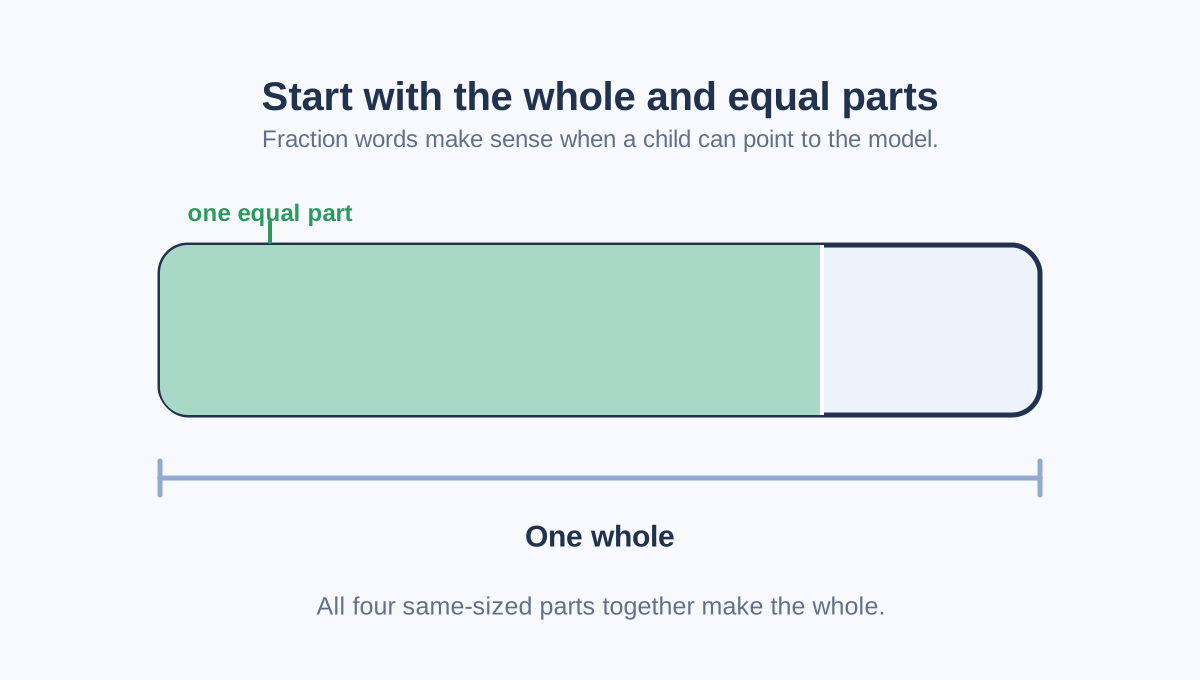
One whole bar divided into four equal parts, with three parts shaded to show the relationship between a whole and equal parts.
A whole is made from all of its equal parts. Fraction vocabulary should always connect back to that complete model.

Example

Vocabulary in 3/4

The whole is split into four equal parts. The denominator is 4, the numerator is 3, and the fraction is read as three-fourths.

Example

Equivalent fraction vocabulary

1/2 and 2/4 are equivalent fractions. They use different equal parts but name the same amount of one whole.

Tips for Parents

  • Teach one or two new words with a picture instead of asking a child to memorize a long list.
  • Ask “what does the 4 tell us?” rather than only asking for the word denominator.
  • Use the same short sentence often: “___ equal parts altogether; ___ parts counted.”
  • Return to the vocabulary when comparison or equivalence feels confusing, because the words explain why the rules work.

Common questions

Fraction Vocabulary FAQ

Start with whole, equal parts, numerator, and denominator. These terms support every later fraction topic.